




History, Art, Culture in Rimini and Riviera
The perfect location of Hotel Ambasciatori for discovering Rimini city centre and the Romagna region
Rimini has always been synonymous with seaside holidays. Yet beyond the beach and entertainment, there are many other itineraries full of charm, perfect for discovering the true soul of the Romagna Riviera: welcoming and traditional, vibrant and full of atmosphere. This journey through Rimini and the Romagna Riviera can begin just a short walk from Hotel Ambasciatori, with a stroll through the historic city centre.
Rimini City Centre: history, art and culture from ancient Rome to today
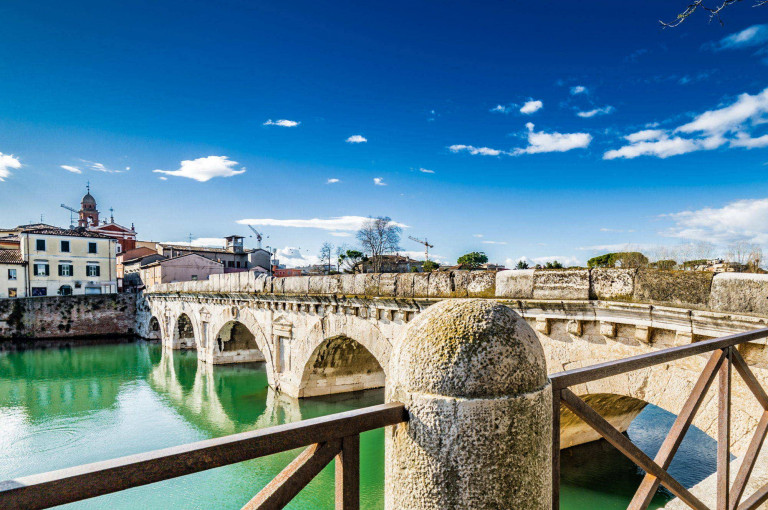
Rimini's historic centre, easily reachable on foot from Marina Centro, is home to remarkable treasures that tell the story of the city from Roman times to the present day, with important traces of the Renaissance period along the way. At the end of the ancient decumanus maximus — today's Corso d'Augusto — stand Rimini's two most important Roman monuments: the Arch of Augustus and the Tiberius Bridge. Other must-see remains from Roman times include the Surgeon's House (Domus del Chirurgo), dating back to the 2nd century AD, and the Roman Amphitheatre, an impressive elliptical structure dedicated to entertainment and only slightly smaller than the Colosseum.
Among the most fascinating examples of the Humanist and Renaissance era are the Tempio Malatestiano, to whose construction the architect Leon Battista Alberti made a major contribution, Castel Sismondo, residence of the powerful Malatesta family who ruled Rimini for more than 200 years, and Piazza Cavour, still preserving its medieval civic layout, with landmarks such as Palazzo dell'Arengo, the Pigna Fountain and the Old Fish Market. Nearby, the City Museum preserves artistic and historical treasures from the period when Rimini was one of the cultural capitals of northern and central Italy.
Moving forward through the centuries, visitors can also discover the Fellini itineraries dedicated to Federico Fellini, the world-famous film director born and raised in Rimini, who immortalised the city in masterpieces such as Amarcord and I Vitelloni. Also worth visiting are the charming fishermen's district of San Giuliano, which still preserves the authentic atmosphere of old Rimini, and the beautifully restored Amintore Galli Theatre, recently returned to its original splendour.
The Romagna Hinterland: castles and breathtaking landscapes
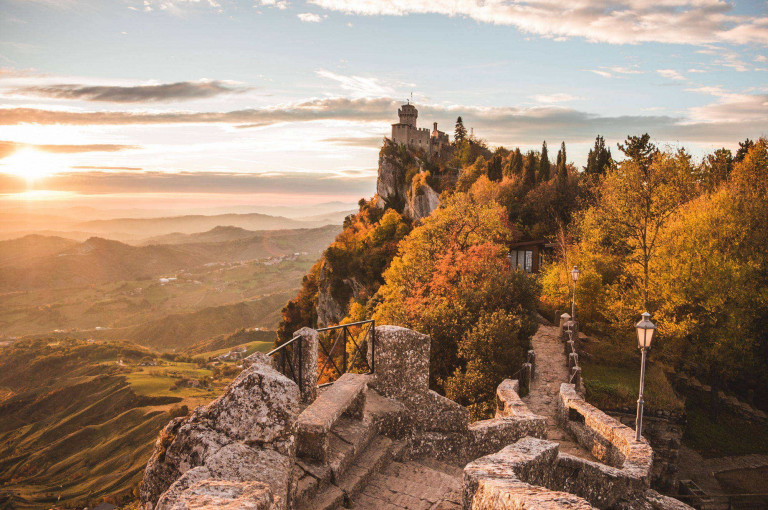
The journey through the historical beauty of the Romagna Riviera continues beyond Rimini, among the villages and hill towns scattered across the countryside behind the coast. Visitors can explore the fortress of Verucchio, birthplace of the powerful Malatesta family, as well as the amazing San Leo, Montebello and Santarcangelo. Following the Marecchia Valley inland, every village and town reveals traces of a fascinating past made of castles, battles, legends and history. Just beyond the province borders, yet deeply connected to local traditions, are several extraordinary destinations worth visiting: San Marino, the independent republic surrounded by the Rimini area; Gradara, famous for the tragic love story of Paolo and Francesca celebrated by Dante; and Urbino, birthplace of Raphael and one of the jewels of the Italian Renaissance.
Getting lost among these landscapes is a unique experience not only for their historical and cultural richness, but also for the stunning panoramic views that appear around every corner of the Romagna hills — unforgettable scenery to carry with you long after your holiday ends.
Tradition at the table: Romagna cuisine
It is impossible to talk about the Romagna Riviera without mentioning its traditional cuisine. Known and appreciated around the world, and reinterpreted by renowned chefs, Romagna's dishes combine flavour and tradition, passed down through generations by the Azdore, the traditional guardians of home cooking. From the famous piadina flatbread to homemade pasta dishes such as passatelli and cappelletti, from local cured meats and cheeses — especially the soft and creamy squacquerone — to grilled meats and seasonal vegetables, every meal tells the story of the region. Everything is best enjoyed with a glass of excellent Sangiovese wine. Our advice? Stop at least once in a traditional trattoria and discover the authentic taste of Romagna.


.jpg)


.jpg)

